
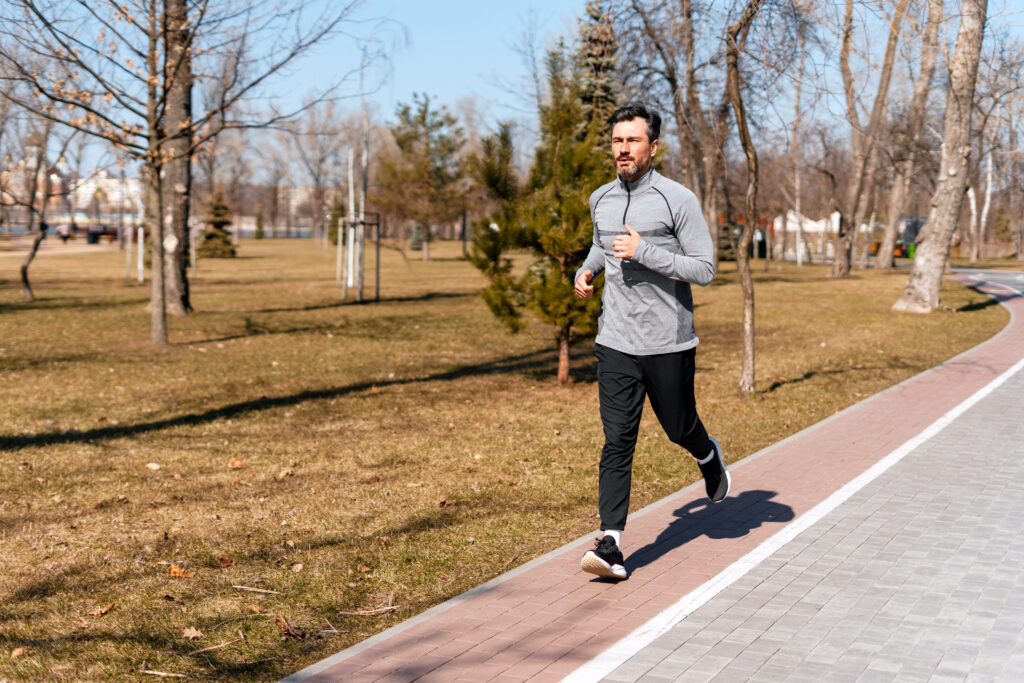
Running can be an important part of staying active, but recurring bladder leaks, sudden urgency, pelvic pressure, or pain around the pelvis or genitals should not automatically be dismissed as a normal part of training.
Some runners notice symptoms only during a longer run. Others may feel discomfort afterward, experience a stronger urge to urinate, or find that symptoms become more noticeable as mileage increases. When these problems keep returning, simply taking a few days off may not address what is contributing to them.
A pelvic health evaluation can help determine whether muscle coordination, tension, strength, breathing patterns, or another factor may be involved.
Is Running Causing Your Bladder Leaks?
If urine escapes when you run, jump, sprint, or increase your training intensity, the repeated impact and pressure involved in those activities may expose an underlying bladder-control problem.
This type of leakage is commonly associated with stress urinary incontinence. According to the Cleveland Clinic, activities that increase pressure through the abdomen can contribute to urine loss in people with stress incontinence.
For runners, leakage may appear as:
- A few drops during a run
- Leakage during sprints or hill work
- Urine loss when jumping or doing strength exercises
- Increasing leakage as a workout continues
- Needing to wear a pad during exercise because of repeated accidents
You do not have to wait until leakage becomes severe before seeking help.
What If You Have Urgency Instead?
Not every running-related bladder problem involves leakage.
Some people experience a sudden, difficult-to-delay need to urinate. You may feel like you need to find a bathroom immediately before, during, or after a workout. You might also notice that the urge becomes stronger when running at a particular pace or distance.
Keeping track of when urgency occurs can be useful. Consider noting:
- How far you had run before symptoms appeared
- Whether you had recently used the bathroom
- How much fluid you consumed beforehand
- Whether certain workouts trigger the problem
- Whether urgency continues after you stop running
This information can give a pelvic health therapist a better understanding of your symptoms and how they relate to your training.
Do Not Ignore Pelvic Pressure or Genital Pain
Pain and pressure deserve attention too.
A runner may describe symptoms as heaviness, aching, tightness, pressure, burning, soreness, or discomfort around the lower abdomen, pelvis, groin, perineum, or genital area.
Symptoms can appear:
- During a run
- Shortly after finishing
- Later in the day
- After increasing mileage
- Following hills, speed work, or intense strength training
- Alongside urinary or bowel changes
Pain does not necessarily mean that you need to stop exercising permanently. It does mean that the reason for the discomfort should be considered.
Could Muscle Function Be Part of the Picture?
The muscles involved in pelvic support and bladder control need to coordinate with the rest of the body during movement.
Problems can occur when those muscles are not producing enough force, when they stay tense when relaxation is needed, or when their timing does not match the demands of the activity.
For a runner, this coordination matters during every stride.
Your pelvic floor also works with your abdominal muscles, diaphragm, hips, and other structures that help stabilize the body. Changes in breathing, posture, running mechanics, training volume, or recovery may affect how these areas work together.
That is one reason why simply doing more strengthening exercises is not always the right answer.
Should You Stop Running?
Not necessarily.
If running repeatedly brings on leakage or pain, continuing to push through the same symptoms may not be productive. At the same time, complete rest may only provide temporary relief if the underlying contributor remains.
A better approach may involve adjusting your training while the problem is being evaluated.
Depending on your symptoms, modifications could include:
- Temporarily reducing mileage
- Changing running intensity
- Allowing additional recovery between sessions
- Adjusting hills or speed work
- Modifying strength-training exercises
- Paying attention to breathing during exertion
- Gradually rebuilding your normal training load
The appropriate approach depends on what is causing your symptoms.
What Happens During a Pelvic Health Evaluation?
A pelvic health assessment is not simply a test of how strong you are.
Your therapist may ask about your running routine, symptoms, previous injuries, bladder habits, bowel function, pain patterns, training changes, and daily activities.
The evaluation may also look at:
- Movement and posture
- Hip and trunk control
- Breathing patterns
- Muscle strength
- Muscle relaxation
- Coordination during movement
- Areas of tenderness or excessive tension
- How symptoms change with specific activities
The goal is to understand how your symptoms fit into your overall movement pattern rather than focusing on one muscle in isolation.
What Can Pelvic Floor Therapy Offer a Runner?
Pelvic floor therapy can be tailored to the demands of your sport.
Treatment may focus on helping you develop better control without unnecessarily increasing muscle tension. Depending on the findings, your program could include exercises for strength, coordination, relaxation, breathing, mobility, or movement control.
A runner’s program may also need to progress gradually from basic exercises to activities that more closely resemble running.
For example, your therapist may help you work on controlling symptoms during increasingly demanding movements rather than expecting you to avoid exercise indefinitely.
The objective is not simply to give you a list of exercises. It is to identify what your body may need and build a plan around your symptoms, activity level, and goals.
What If Pain Is the Main Problem?
Some runners experience pain as the primary concern rather than bladder leakage.
If pelvic or surrounding soft-tissue pain is limiting your activity, your provider may discuss different treatment approaches based on the suspected source of your symptoms.
Davenport Pelvic Therapy also discusses how SoftWave Therapy may support active men and athletes as one potential treatment option. SoftWave Therapy is not appropriate for every person or every type of pain, so an individualized assessment is important before deciding whether it belongs in a treatment plan.
When Should You Get Help?
Consider scheduling a pelvic health evaluation if you regularly experience:
- Urine leakage while running
- Sudden urinary urgency during workouts
- Pelvic pressure or heaviness
- Groin or genital discomfort
- Pelvic pain after running
- Symptoms that increase as your mileage increases
- Problems that repeatedly return after rest
- Symptoms that are beginning to change how you train
You should also seek appropriate medical evaluation for new, severe, unexplained, or rapidly worsening symptoms, especially when they occur with other concerning changes.
Keep Running, But Do Not Ignore the Signals
Running should not have to mean accepting bladder leaks, pelvic pressure, or recurring pain as the price of staying active.
If your symptoms repeatedly appear during training, the goal should not simply be to rest until they disappear and then repeat the same cycle. Understanding what is contributing to the problem can help you make more informed decisions about treatment and training.
If leakage, urgency, pelvic pressure, or pain is affecting your workouts, you do not have to simply push through it. Contact Davenport Pelvic Therapy to learn whether a pelvic health evaluation may help identify what is contributing to your symptoms and what treatment options may be appropriate.