
You finish using the bathroom, feel like you are done, and then a few drops of urine appear in your underwear a short time later.
For many men, this is an occasional annoyance. For others, it happens regularly and can become frustrating, especially when it occurs while getting dressed, walking away from the bathroom, or sitting down.
This type of leakage is commonly referred to as post-void dribble or post-micturition dribble. Although the amount of urine is usually small, repeated episodes can affect comfort and confidence.
The good news is that you do not necessarily have to simply accept it as part of getting older. Understanding what may be behind the leakage can help you determine whether an evaluation or pelvic floor therapy could be useful.
What Does Post-Void Dribble Look Like?
Post-void dribble refers to urine escaping shortly after a man believes he has finished emptying his bladder.
You might notice it:
- When you zip up your pants
- As you walk away from the toilet
- When you sit down
- While getting dressed
- A few moments after leaving the bathroom
The timing is an important part of the symptom. This is different from leaking urine when you cough, sneeze, exercise, or lift something heavy. It is also different from an intense urge to urinate that causes you to leak before reaching the bathroom.
Keeping track of when the leakage occurs and what other urinary symptoms you have can provide useful information when discussing the problem with a healthcare professional.
Why Can This Happen?
Urinating involves more than the bladder simply filling and emptying.
Once urine leaves the bladder, it travels through the urethra before exiting the body. Sometimes, a few drops can remain in this passage even though the main flow has stopped. Movement after leaving the bathroom can then allow those drops to escape.
The muscles around the pelvis also have an important role in urinary control. They need to respond at the appropriate moments as you store and release urine.
For some men, difficulty coordinating these muscles may contribute to leakage after urination. In other situations, urinary symptoms may be associated with the bladder, prostate, urethra, medications, or another underlying condition.
That is why persistent dribbling should not automatically be blamed on weak pelvic muscles.
Could Your Pelvic Floor Be Involved?
Possibly.
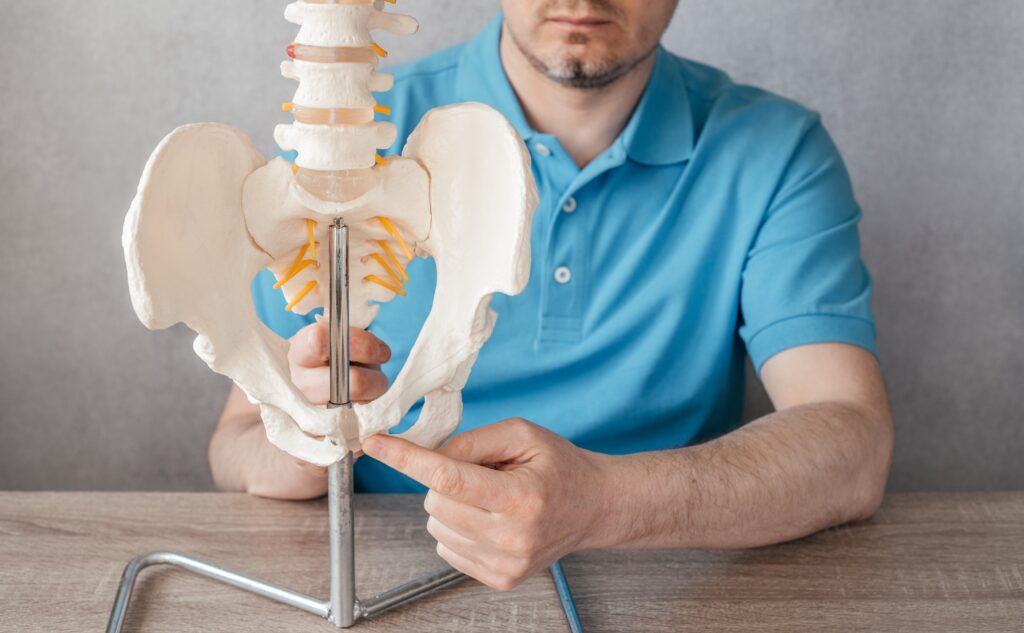
The pelvic floor muscles sit at the bottom of the pelvis and help support the bladder and bowel. They also contribute to bladder control and sexual function.
For urinary control to work efficiently, these muscles need to be able to contract when needed and relax when appropriate.
That means pelvic floor function is not simply about having strong muscles.
A man may have difficulty controlling his pelvic muscles, trouble relaxing them, or problems coordinating them with other muscles involved in urination. An assessment can help identify which factors may be relevant in your particular case.
Mayo Clinic notes that pelvic floor exercises can help some men who experience urine dribbling after using the bathroom. However, it recommends discussing the exercises with a healthcare professional to determine whether they are appropriate and to make sure they are being performed correctly.
Is It Always a Pelvic Floor Issue?
No.
There are several possible explanations for urinary changes in men. One possibility is benign prostatic hyperplasia (BPH), a noncancerous increase in prostate size that becomes more common with age.
BPH can be associated with symptoms such as:
- A weaker urine stream
- A stream that stops and starts
- Difficulty getting the stream started
- Feeling that you have not completely emptied your bladder
- Needing to urinate more often
- Getting up repeatedly during the night
- Dribbling toward the end of urination
Other conditions can produce similar urinary symptoms, including urinary tract problems, narrowing of the urethra, bladder stones, prostate inflammation, certain medications, or problems affecting the nerves that control the bladder.
This is why it is important to look at the whole picture rather than focusing on the dribbling alone.
What Other Symptoms Should You Watch For?
A few drops of leakage by themselves may not tell you much about the underlying cause. Pay attention to whether anything else has changed with your urination.
For example, you may want to mention it to your healthcare provider if you are also experiencing:
- A noticeably weaker stream
- Trouble beginning urination
- Frequent trips to the bathroom
- Sudden urinary urgency
- Waking several times at night to urinate
- A sensation that your bladder remains partly full
- Pain or burning when urinating
- Blood in your urine
- Increasing difficulty controlling your bladder
The combination of symptoms can help your healthcare provider determine whether additional testing or evaluation is appropriate.
Should Men Do Kegel Exercises for Dribbling?
Pelvic floor exercises can be helpful for some men, but doing more exercises is not automatically the answer.
The first step is understanding which muscles need attention and how they are functioning.
If weakness is contributing to urinary leakage, targeted strengthening may be useful. If muscle coordination or relaxation is the bigger concern, treatment may look different.
Another important point is that you should not routinely practice stopping your urine stream as an exercise. Mayo Clinic advises against making a habit of interrupting urination because this can interfere with normal bladder emptying.
Working with a pelvic floor physical therapist can help you learn how to identify and use the appropriate muscles without guessing at the cause of your symptoms.
For some men, difficulty coordinating these muscles may contribute to urinary leakage. If you are experiencing post-void dribble along with other pelvic health concerns, learning more about pelvic floor therapy for men and the symptoms that should not be ignored can be a helpful next step.
How Can Pelvic Floor Therapy Help?
A pelvic floor therapy evaluation looks beyond the symptom itself.
Your therapist may ask about:
- When the leakage occurs
- Your usual bathroom habits
- Urinary frequency and urgency
- Previous pelvic or prostate procedures
- Bowel habits
- Exercise and daily activities
- Other pelvic or sexual health symptoms
The physical assessment may examine how your pelvic floor muscles contract, relax, and coordinate with surrounding muscles.
Depending on what is found, treatment may include:
Pelvic Floor Coordination
You may learn how to better coordinate your pelvic muscles with everyday movements and bladder function.
Strength Training
If reduced muscle strength is contributing to urinary leakage, your therapist may develop an individualized strengthening program.
Muscle Relaxation
Some men have pelvic muscles that remain overly active or have difficulty relaxing. In those cases, learning to release unnecessary tension may be an important part of treatment.
Breathing and Movement Strategies
Your pelvic floor does not work independently. It responds to changes in pressure and movement throughout your body. Therapy may therefore incorporate breathing, posture, movement, and other strategies that support better coordination.
Personalized Home Exercises
Rather than giving every patient the same routine, a therapist can help determine which exercises are appropriate for your specific symptoms and goals.
What Can You Do Before Your Appointment?
If the problem is happening regularly, start paying attention to patterns.
You could keep a simple record of:
- When you urinate
- How often leakage occurs
- How many drops or how much urine you notice
- Whether you experience urgency
- Whether your stream has changed
- Whether you feel fully empty afterward
- How often you wake at night to urinate
This information can make it easier to explain what you are experiencing during an appointment.
It is also worth avoiding the temptation to repeatedly force urine out or hold your urine for unusually long periods in an attempt to solve the problem. If you regularly feel unable to empty your bladder, that deserves professional attention.
When Should You Get Checked?
You do not need to wait until urinary leakage becomes severe before discussing it.
Consider making an appointment if the problem is persistent, increasing, or interfering with your daily life.
You should also seek medical evaluation if dribbling occurs alongside significant changes in your urinary stream, difficulty emptying your bladder, pain, blood in the urine, or other concerning symptoms.
If you suddenly become unable to urinate, seek medical care promptly. Difficulty passing urine can sometimes indicate a urinary blockage that requires immediate attention.
Frequently Asked Questions
Is post-void dribble normal in men?
It can be a common urinary symptom, but frequent or bothersome leakage should not simply be dismissed. An evaluation can help identify whether pelvic floor function, prostate changes, bladder issues, or another factor may be involved.
Does post-void dribble mean I have an enlarged prostate?
Not necessarily. Prostate enlargement can cause dribbling and other urinary symptoms, but there are several possible explanations. The presence of other symptoms and a proper evaluation are important.
Can pelvic floor therapy stop urine from leaking after urination?
Pelvic floor therapy may help when muscle weakness, poor coordination, or other pelvic floor factors are contributing to the problem. Treatment depends on what an individual assessment finds.
Should I do Kegels if I have post-void dribble?
Kegel exercises can benefit some men, but they are not appropriate for everyone and should be performed correctly. A healthcare professional or pelvic floor physical therapist can help determine whether strengthening exercises are suitable for you.
When should I see a doctor about urinary dribbling?
If the leakage is frequent, worsening, affecting your quality of life, or accompanied by other urinary symptoms, it is worth discussing with a healthcare professional. Sudden inability to urinate requires prompt medical attention.
You Don’t Have to Ignore the Problem
Leaking a few drops after urination may seem too minor to bring up with a healthcare professional. But if it happens regularly, it is a legitimate pelvic health concern.
The cause can vary from one man to another. For some, pelvic floor weakness or poor coordination may contribute. For others, prostate or urinary tract issues may need to be considered.
Getting the right evaluation is the first step toward understanding what is happening.
At Davenport Pelvic Therapy, men’s pelvic health care can include individualized assessment of pelvic floor function, muscle coordination, urinary symptoms, and related concerns. Treatment is tailored to the individual rather than assuming that every urinary problem requires the same exercise program.
If you are looking for pelvic floor therapy in Florida or exploring pelvic health specialists in South Florida, Davenport Pelvic Therapy offers several locations to help patients access specialized pelvic health care.
Contact Davenport Pelvic Therapy to learn more about your options and determine whether pelvic floor therapy may be appropriate for your symptoms.