
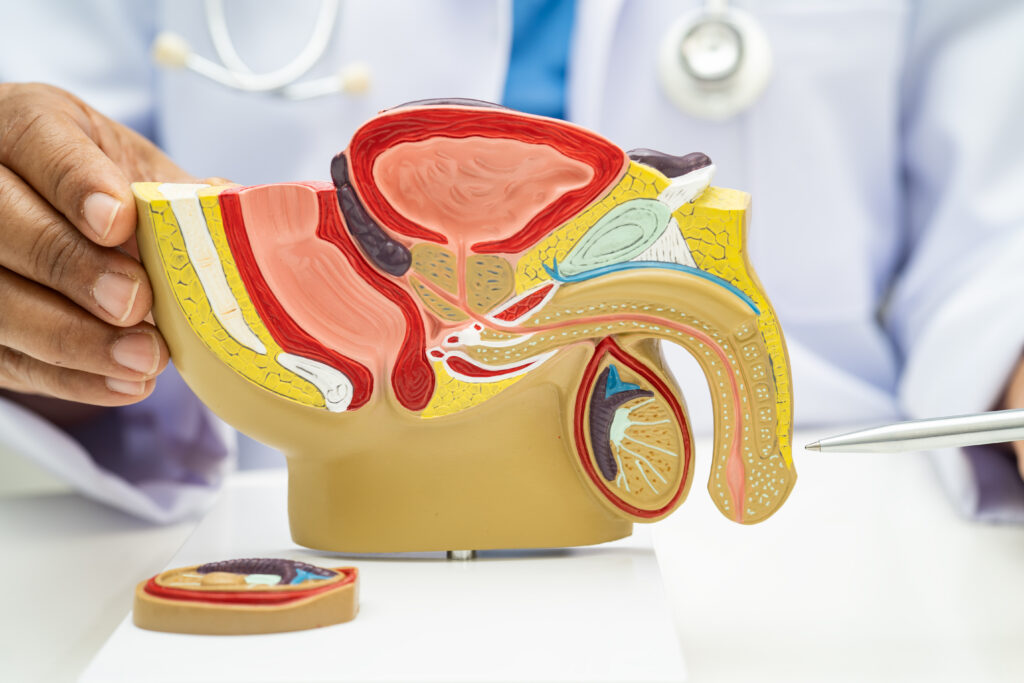
You have pelvic pain that will not go away. Maybe you feel pressure between the scrotum and rectum. Perhaps urinating has become uncomfortable, you need to use the bathroom more often, or sexual activity causes pain.
You have already seen a doctor. You may have had urine testing, blood work, imaging, or other examinations. Yet nothing seems to explain why you still have symptoms.
So what happens when the tests come back negative, but the pain is still there?
For some men, persistent pelvic symptoms are related to a condition called chronic pelvic pain syndrome. In other cases, the pelvic floor muscles or other structures in the pelvic region may contribute to the symptoms.
This is also why it is important not to assume that every case of pelvic pain is caused by a prostate infection.
Understanding the difference between prostatitis, chronic pelvic pain, and pelvic floor dysfunction can help you have a more informed conversation with your healthcare provider about what to do next.
What Is Prostatitis?
Prostatitis is a term used to describe several conditions involving the prostate that can produce pelvic and urinary symptoms.
One important point is that prostatitis does not always mean a bacterial infection.
Bacterial prostatitis can cause symptoms such as painful urination, urinary frequency, pelvic discomfort, fever, chills, and difficulty urinating. Acute bacterial prostatitis can require prompt medical treatment.
Other men experience symptoms that persist or return without evidence of a bacterial infection. This is often referred to as chronic prostatitis/chronic pelvic pain syndrome (CP/CPPS). Mayo Clinic explains that this form can cause pelvic discomfort and urinary or sexual symptoms even when an infection is not identified.
That distinction is important because treatment for a confirmed infection is different from treatment for persistent pelvic pain without evidence of infection.
What Can Pelvic Pain Feel Like in Men?
Pelvic pain does not necessarily stay in one specific location.
Depending on the individual, discomfort may be felt around the:
- Lower abdomen
- Perineum, which is the area between the scrotum and anus
- Penis
- Testicles
- Groin
- Lower back
- Area around the bladder
Some men describe the sensation as aching or pressure. Others experience burning, tenderness, tightness, or intermittent pain.
Symptoms can also change over time. You may feel relatively comfortable one day and experience more noticeable discomfort the next.
Along with pain, you may notice urinary or sexual symptoms such as:
- Increased urinary frequency
- Sudden urgency to urinate
- Burning or discomfort during urination
- Difficulty getting the urine stream started
- A weak or interrupted stream
- A sensation that the bladder has not completely emptied
- Pain during or after ejaculation
- Discomfort following prolonged sitting
Not every man will experience all of these symptoms.
Why Can Symptoms Continue When Tests Are Negative?
A negative test can rule out certain problems, but it does not necessarily explain every possible reason for pelvic discomfort.
For example, if testing does not show a bacterial infection, that information can help your healthcare provider determine whether another explanation should be considered.
Chronic pelvic pain syndrome can involve ongoing or recurring discomfort without an identifiable bacterial cause. The symptoms can overlap with other pelvic and urinary conditions, which can make the situation particularly frustrating for patients.
The pelvic floor may also deserve attention.
The muscles in this area are involved in bladder control, bowel function, sexual function, and pelvic support. If they become overly tense, sensitive, weak, or poorly coordinated, they may contribute to symptoms in some men.
This does not mean that pelvic floor dysfunction is automatically the cause of persistent pelvic pain. Rather, it is one possible factor that can be evaluated.
Could Your Pelvic Floor Be Part of the Problem?
Many people associate pelvic floor problems with muscle weakness.
But pelvic floor muscles can also have difficulty relaxing and coordinating properly.
Imagine constantly holding tension in your shoulders. After a while, the muscles may become uncomfortable and sensitive. A similar concept can apply to muscles in the pelvic region.
Some men with persistent pelvic symptoms may develop increased tension or guarding in the pelvic floor. This can potentially affect how the muscles respond during activities such as urination, bowel movements, exercise, prolonged sitting, or sexual activity.
The relationship between pain and muscle tension can also become complicated.
Pain may cause the body to tighten certain muscles as a protective response. Increased muscle tension may then contribute to additional discomfort or sensitivity. This does not mean the symptoms are psychological. It means that pain and muscle function can influence one another.
A pelvic floor assessment can help determine whether muscle tension, weakness, tenderness, or coordination problems are relevant to your symptoms.
Pelvic Pain Does Not Always Mean You Need More Kegels
If you search online for pelvic floor problems, you will often find recommendations for Kegel exercises.
But strengthening is not automatically appropriate for every man with pelvic pain.
If your muscles are already tense or you have difficulty relaxing them, repeatedly contracting those muscles may not address the underlying issue.
Instead, treatment may focus on helping you understand how to relax and coordinate the pelvic floor.
Depending on your evaluation, therapy may include:
Pelvic Floor Muscle Assessment
A pelvic floor physical therapist can evaluate how your muscles contract and relax and look for areas that may be contributing to discomfort.
Relaxation Techniques
If excessive muscle tension appears to be part of the problem, therapy may incorporate techniques designed to help reduce unnecessary pelvic floor activity.
Breathing Strategies
Breathing affects pressure and muscle activity throughout the trunk and pelvis. Learning more effective breathing patterns may be included in treatment.
Mobility and Movement
Your hips, abdomen, lower back, and pelvis work together. Restrictions or movement patterns in these areas may be considered during an individualized assessment.
Manual Therapy
When clinically appropriate, hands-on treatment may be used to address areas of muscle or soft-tissue restriction.
Personalized Exercises
Rather than following a generic exercise program, your therapist can help determine which movements or exercises are appropriate based on your symptoms and physical findings.
What If You Have Already Seen a Doctor?
If you have already been evaluated, that is an important first step.
A negative test result can provide useful information, but persistent symptoms may still warrant further discussion.
You can ask your healthcare provider questions such as:
- Could my symptoms be consistent with chronic pelvic pain syndrome?
- Has an infection been adequately ruled out?
- Could another urinary or prostate condition be involved?
- Could pelvic floor muscle tension be contributing?
- Would a pelvic floor evaluation be appropriate?
- Should I see another type of specialist?
Your provider can determine whether additional testing or referral is appropriate based on your symptoms and medical history.
The goal is not to keep searching for a diagnosis indefinitely. It is to make sure that persistent symptoms are being considered from the appropriate medical and musculoskeletal perspectives.
Don’t Dismiss Symptoms Just Because They Are Common
Men sometimes put off seeking help because they assume pelvic discomfort, urinary changes, or sexual symptoms are simply part of aging.
But common does not necessarily mean something you should have to tolerate indefinitely.
If you have ongoing pelvic symptoms, learning which changes deserve further attention can be useful. Pelvic floor symptoms that are not normal, even if they are common can affect daily comfort, exercise, urinary function, and quality of life.
The important question is not simply whether a symptom is common. It is whether there is an identifiable and treatable factor contributing to your experience.
When Should You Seek Medical Care?
Persistent pelvic pain should be discussed with an appropriate healthcare professional, particularly when symptoms are changing or interfering with everyday activities.
Seek prompt medical attention if you experience:
- Sudden inability to urinate
- Severe or rapidly worsening pelvic pain
- Fever or chills accompanied by urinary symptoms
- Blood in your urine
- Significant difficulty passing urine
These symptoms can sometimes indicate an acute condition requiring medical attention.
For symptoms that are persistent but not urgent, an evaluation can help determine what factors may be contributing and whether additional care is appropriate.
How Pelvic Floor Therapy May Help
Pelvic floor therapy is not a replacement for medical evaluation when prostatitis or another medical condition is suspected.
Instead, it can complement medical care when pelvic floor muscle function appears to be contributing to symptoms.
At Davenport Pelvic Therapy, treatment for men’s pelvic health concerns is individualized. Depending on the findings of your evaluation, therapy may address pelvic floor tension, muscle coordination, mobility, movement patterns, and other factors associated with pelvic discomfort.
The goal is not simply to treat a diagnosis on paper. It is to understand how your symptoms affect your daily life and identify appropriate strategies to support your recovery.
Davenport Pelvic Therapy offers pelvic floor therapy options in Florida, with several locations available for patients seeking specialized pelvic health care.
You Can Still Seek Answers
Persistent pelvic pain can be frustrating, especially when you have already undergone testing and have not received a clear explanation.
But a negative test does not mean that your symptoms should be ignored.
Prostatitis, chronic pelvic pain syndrome, pelvic floor dysfunction, urinary conditions, and other factors can produce overlapping symptoms. Determining which factors are relevant to you requires an individualized medical assessment.
If pelvic pain, urinary symptoms, or discomfort with sexual activity continue, talk with your healthcare provider about your options. When appropriate, a pelvic floor evaluation may provide another perspective on what could be contributing to your symptoms.
You do not have to dismiss ongoing pelvic discomfort simply because your initial tests did not reveal an obvious cause.
Still experiencing pelvic pain despite negative tests? You do not have to keep managing unexplained symptoms on your own. Davenport Pelvic Therapy can evaluate whether pelvic floor muscle tension, coordination, or other contributing factors may be part of the picture.
If you are looking for pelvic floor therapy in Florida or pelvic health specialists in South Florida, contact Davenport Pelvic Therapy to learn more about your treatment options.