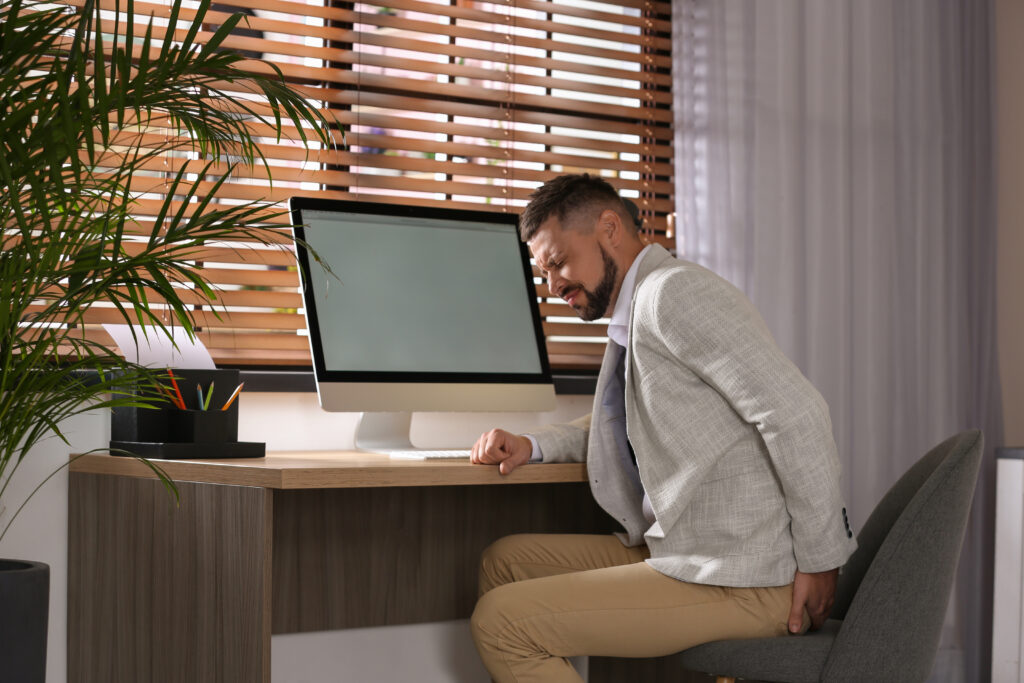
Sitting has become a normal part of daily life. Whether you work at a desk, drive for long hours, or spend evenings relaxing on the couch, many men sit far more than they realize. While sitting itself is not harmful, doing it for long stretches without movement can have a significant impact on pelvic health.
Men who experience pelvic pain, urinary symptoms, or tension often notice their symptoms worsen after a long workday or extended periods of sitting. This is not a coincidence. Prolonged sitting alters posture, reduces circulation, and places direct pressure on the pelvic floor.
The good news is that small changes can make a big difference. Understanding how sitting affects the pelvis is the first step toward maintaining comfort and preventing symptoms from developing.
Why Sitting Puts Stress on the Pelvic Floor
The pelvic floor is a group of muscles at the base of the pelvis that help support the bladder, bowel, and sexual function. When you sit for long periods, these muscles remain under constant pressure.
Several things happen during prolonged sitting:
- Blood flow to the pelvic area decreases
- Muscles stay in a shortened or compressed position
- Posture often collapses
- Core muscles disengage or overwork
- Nerves become more sensitive over time
These changes make it harder for the pelvic floor to relax and recover, especially if sitting is combined with stress or poor posture.
Common Sitting Habits That Affect Pelvic Health
Not all sitting is the same. Certain habits place more strain on the pelvis than others.
Slouched Sitting
Rounding the lower back and tucking the pelvis increases downward pressure on the pelvic floor. This posture also limits healthy breathing, which contributes to muscle tension.
Sitting on One Hip
Leaning to one side creates uneven pressure through the pelvis. Over time, this imbalance can lead to tightness or discomfort on one side.
Sitting Without Back Support
When the spine lacks support, the pelvic floor often works harder to stabilize the body.
Long Periods Without Movement
Even good posture can become a problem when held for too long. Muscles need movement to maintain healthy circulation and flexibility.
Symptoms Linked to Too Much Sitting
Men who sit for extended periods may experience:
- Pelvic pressure or heaviness
- Deep pelvic or perineal discomfort
- Urinary urgency or frequency
- Pain that increases by the end of the day
- Hip or lower back stiffness
- Testicular aching or sensitivity
These symptoms often improve temporarily with standing or walking, then return once sitting resumes.
If pelvic pain or urinary issues have been affecting you, learn more on our Pelvic Pain and Prostatitis page.
How Sitting Affects Circulation and Nerve Sensitivity
Sitting for long periods reduces blood flow through the pelvis and hips. Poor circulation slows tissue recovery and increases sensitivity.
According to Mayo Clinic, prolonged sitting can contribute to muscle stiffness, reduced circulation, and increased discomfort, particularly when posture and movement are limited.
When circulation is restricted, nerves in the pelvic region may become more reactive. This can lead to burning, aching, or pressure sensations that worsen throughout the day.
Simple Changes That Protect Pelvic Health While Sitting
You do not need to eliminate sitting completely to reduce pelvic strain. Small, consistent changes can greatly improve comfort.
1. Break Up Sitting Time
Aim to stand or move every 30 to 60 minutes. Even a short walk or posture reset helps restore blood flow.
2. Sit With Neutral Pelvic Position
Keep your pelvis balanced rather than tucked under. Your weight should rest evenly through both hips.
3. Use Support When Needed
A supportive chair or small cushion behind the lower back helps reduce strain. Avoid sitting on overly soft surfaces for long periods.
4. Keep Feet Flat on the Floor
This helps maintain better alignment through the hips and pelvis.
5. Avoid Holding Your Stomach In
Constantly tightening your abdomen increases pressure on the pelvic floor.
6. Adjust Screen Height
When screens are too low, posture collapses. Keeping screens at eye level helps reduce strain.
The Role of Movement in Pelvic Health
Movement is essential for pelvic health. Walking, gentle stretching, and mobility exercises help reduce stiffness and support circulation.
Helpful movement habits include:
- Short walks during breaks
- Gentle hip stretches
- Standing desk intervals
- Light movement before and after work
Consistency matters more than intensity. Regular movement throughout the day keeps pelvic muscles healthier than a single workout after hours of sitting.
When Sitting-Related Symptoms Signal Pelvic Floor Dysfunction
Occasional stiffness after sitting is common. Ongoing pelvic pain, urinary changes, or pressure that does not improve may indicate pelvic floor dysfunction.
Signs that pelvic therapy may help include:
- Pain that worsens with sitting and stress
- Urinary urgency without infection
- Symptoms that improve with movement but return quickly
- Difficulty relaxing pelvic muscles
Pelvic therapy focuses on restoring muscle coordination, improving posture, and reducing tension patterns caused by prolonged sitting.
Learn more about care options in our article Exploring the Benefits of Shockwave Therapy for Pelvic Health.
How Pelvic Therapy Addresses Sitting-Related Issues
Pelvic therapy looks beyond symptoms to address underlying habits and movement patterns.
Treatment may include:
- Posture assessment and correction
- Breathing retraining
- Manual therapy to reduce muscle tension
- Movement education for daily activities
- Strategies for managing work-related sitting
These tools help reduce symptoms and prevent them from returning.
Frequently Asked Questions
Is sitting always bad for pelvic health?
No. Sitting itself is not harmful, but long periods without movement increase the risk.
Can a standing desk fix pelvic pain?
Standing desks help when used correctly, but regular movement is still important.
Why does sitting make urinary urgency worse?
Sitting increases pelvic pressure and may irritate sensitive muscles or nerves.
How long does it take to see improvement?
Many men notice changes within weeks once posture and movement habits improve.
Do I need pelvic therapy if symptoms are mild?
Early guidance can prevent symptoms from becoming chronic.
Creating a Healthier Workday for Your Pelvis
Sitting is a part of modern life, but it does not have to control your comfort or health. With better posture, regular movement, and awareness of how your body responds, you can reduce pelvic tension and feel better throughout the day.
If sitting has been affecting your pelvic health, schedule a free consultation.