
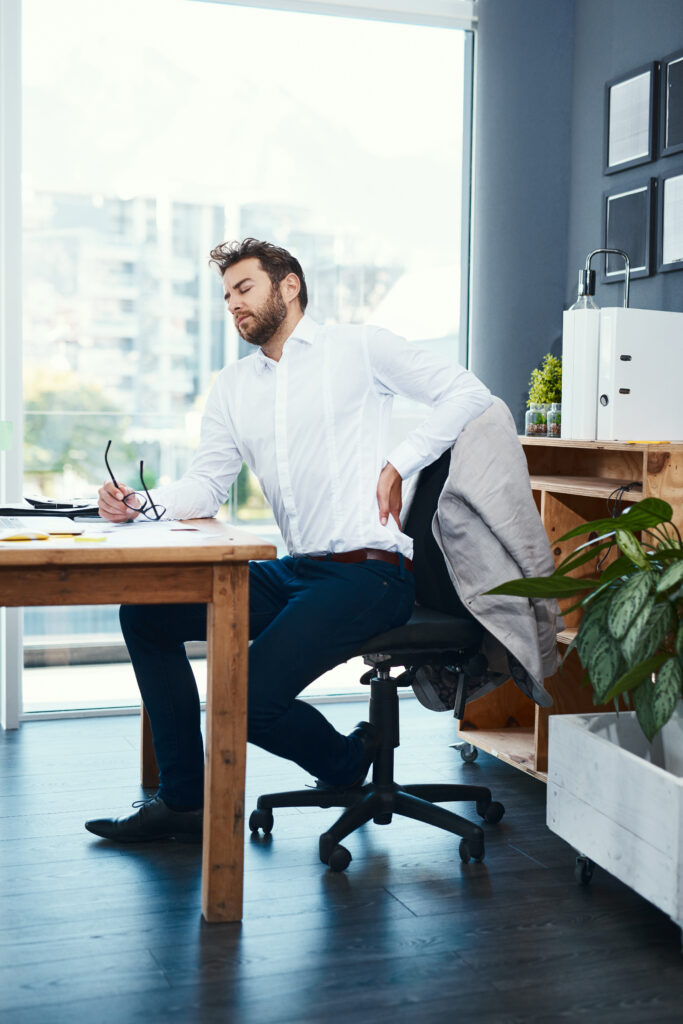
A man may finish a long workday and notice an uncomfortable sensation around his groin, lower abdomen, or the area between his genitals and anus. The same problem might appear during a lengthy drive, after working on a computer, or while watching television.
Sometimes the sensation fades after getting up. In other cases, it lingers and makes the next sitting session uncomfortable.
Repeated episodes deserve attention. Although spending time in a chair is a normal part of daily life, discomfort that consistently follows this activity may point to an underlying issue involving the pelvic region.
The important question is not simply how many hours you sit. It is what makes your body react to that position and whether another condition is contributing to the symptoms.
Why Sitting Can Bring On Discomfort Around the Male Pelvis
The pelvis contains several structures that work together during everyday activities. Muscles help control bladder and bowel function, nerves carry sensory information, and the hips and lower back support the body’s movement.
When you sit, your weight rests against the chair while your hips remain bent. If you stay in that position without much movement, certain tissues experience sustained pressure or limited mobility.
For someone with an existing source of irritation, this may be enough to bring symptoms to the surface. The location of the discomfort can offer clues, but it cannot establish the cause by itself.
Pelvic muscles that remain under tension
Muscles around the base of the pelvis contribute to continence, sexual function, and support during movement. They also need to adjust their activity throughout the day.
If a man has difficulty releasing these muscles, the surrounding area may become uncomfortable during activities that involve prolonged positioning.
The resulting sensation might be a persistent ache, pressure near the perineum, or tenderness that becomes more noticeable as the day progresses.
Muscular discomfort can also appear alongside difficulty urinating, bowel-related symptoms, or pain during sexual activity. These accompanying complaints are worth mentioning during an assessment.
Sensitivity involving nerves
The pelvic region contains nerves that supply sensation to the genital area, perineum, and nearby tissues. Irritation affecting one of these nerves can make certain positions unpleasant.
Pudendal neuralgia is one condition associated with pain in areas supplied by the pudendal nerve. Sitting may aggravate symptoms for some people, and the discomfort can include burning, sharp sensations, or unusual sensitivity.
The pattern is not the same for everyone. A clinician needs to consider the person’s symptoms and medical history before determining whether a nerve-related condition is involved.
Strain extending from the hips or back
Pelvic discomfort may sometimes be connected to the way the hips and lower back respond to prolonged positioning.
For example, a man who spends much of his day leaning forward or sitting with limited hip movement may notice stiffness or discomfort around the lower trunk. The source could involve muscles or joints outside the pelvic floor itself.
This is why an evaluation may include questions about back pain, hip mobility, exercise habits, and the positions that make symptoms better or worse.
Conditions involving the prostate
Prostatitis is another possible explanation for pain affecting the male pelvic region. The term describes several prostate-related conditions that can involve discomfort, urinary complaints, or sexual symptoms.
The Mayo Clinic’s information about prostatitis explains that symptoms may include pain around the pelvis, groin, genitals, or lower back, along with changes in urination.
Some men with chronic pelvic pain syndrome also have pelvic muscle involvement. However, recurring discomfort should not automatically be attributed to either the prostate or the muscles without appropriate assessment.
What the Location and Timing of Your Symptoms May Reveal
Pay attention to the circumstances surrounding your discomfort. The details may help a healthcare professional distinguish between possible causes.
For example, consider these questions:
- Does the discomfort begin after a short time in the chair, or only after several hours?
- Is it concentrated near the perineum, groin, lower abdomen, or genital area?
- Does walking around change the sensation?
- Do you notice burning, tingling, or increased sensitivity?
- Are urination, bowel movements, or ejaculation associated with pain?
- Does the same problem occur when driving, exercising, or lying down?
A simple symptom diary can help you identify recurring patterns. Record the activity, approximate duration, location of the discomfort, and anything that seems to ease or aggravate it.
Pain that improves after standing is useful information, but it does not prove that sitting pressure is the only cause.
Everyday Changes Worth Trying
If remaining seated repeatedly aggravates your symptoms, consider adjusting how you spend the day.
Interrupt your sitting routine
Build short movement breaks into work, travel, or leisure activities. Walk around when practical, change positions, or stand briefly rather than remaining in the same posture for an extended stretch.
There is no single break schedule that works for everyone. Start with intervals that feel manageable and adjust according to your symptoms.
Make your chair and working position more comfortable
Check whether your feet are supported and whether your hips feel cramped. Notice if you consistently lean to one side or place pressure on an area that already feels sore.
A different chair or a modest change in seat position may improve comfort, although it will not necessarily resolve an underlying medical condition.
Be selective about exercises
Gentle walking and comfortable movement may be useful ways to stay active. If cycling, weightlifting, or another activity consistently brings on symptoms, consider modifying it while you investigate the cause.
Avoid assuming that more pelvic muscle contractions are always the answer. Some men need help improving muscle relaxation or coordination rather than simply increasing strength.
Could Pelvic Floor Therapy Be Appropriate?
Pelvic floor therapy may be considered when an examination suggests that muscle function or related movement patterns are contributing to symptoms.
A pelvic health professional can discuss the discomfort, examine relevant movement and muscle function, and help determine whether specialized care may be appropriate.
Depending on the findings, an individualized program could include movement education, strategies for managing muscular tension, coordination exercises, or changes to activities that repeatedly aggravate the symptoms.
Men researching treatment options may also find Davenport Pelvic Therapy’s article on shockwave therapy for pelvic pain and how it may support healing and recovery helpful. It provides additional information about this treatment approach. Whether shockwave therapy is appropriate depends on the individual’s condition and clinical assessment.
Pelvic therapy does not replace medical investigation for prostate conditions, urinary problems, or other possible causes of pain.
When Pelvic Discomfort Needs Medical Attention
Arrange an evaluation if symptoms recur, interfere with daily activities, or continue despite changes to your sitting routine.
Seek prompt medical care if you experience severe or sudden pain, fever, difficulty passing urine, blood in your urine, or significant swelling involving the scrotum. These symptoms may require medical treatment rather than routine therapy.
A healthcare professional can help determine whether the next step should involve medical testing, pelvic health assessment, or another form of care.
Pelvic Health Support in Florida
Men do not have to accept recurring pelvic discomfort as an inevitable consequence of working at a desk or spending time behind the wheel.
Finding the reason for the symptoms is an important first step. Depending on the findings, appropriate care may involve a physician, a pelvic health specialist, or a combination of providers.
Davenport Pelvic Therapy offers pelvic health services at several locations throughout Florida. Men exploring pelvic floor therapy in Florida or looking for pelvic health specialists in South Florida can visit the Davenport Pelvic Therapy contact page to learn more about available locations and services.
If sitting has become a regular source of discomfort, consider seeking an evaluation. Understanding what is happening in your body can help you make informed decisions about your health and daily activities.