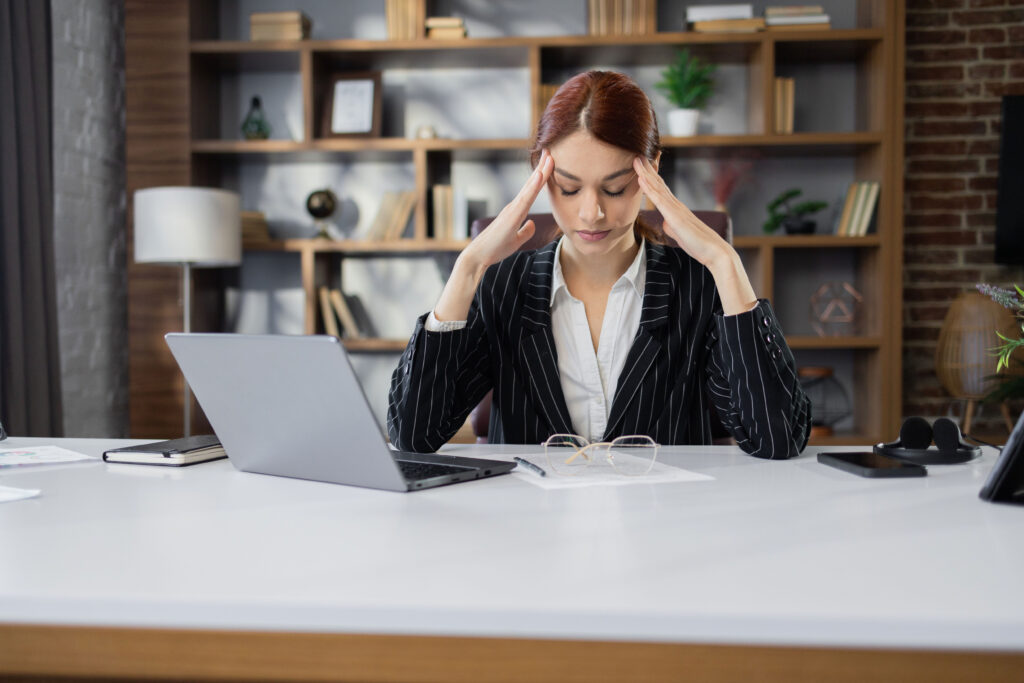
Stress can show up in your body in ways you may not immediately recognize.
During a demanding period, you might notice tight shoulders, headaches, stomach discomfort, difficulty sleeping, or changes in your energy. For some people, pelvic discomfort may also become more noticeable when life becomes particularly stressful.
So, can stress cause pelvic pain?
It is more accurate to say that stress can be one factor that influences pelvic pain rather than assuming it is always the cause.
Pelvic pain can have many possible sources, including the urinary system, digestive system, reproductive organs, muscles, connective tissues, and nerves. Stress may affect how the body responds to pain and may contribute to a cycle in which discomfort and emotional strain make each other more difficult to manage.
That distinction matters. Pelvic pain is real, and telling someone to “just relax” is not an appropriate way to address it.
Why Can Stress Affect the Body?
Your body responds to stressful situations by preparing you to deal with a perceived challenge.
You may notice your breathing change, your heart rate increase, or your muscles become more active. If stress continues for days or weeks, you may also develop habits such as holding your breath, tightening your shoulders, clenching your jaw, or bracing your abdominal muscles.
You may not even realize you are doing it.
The muscles around the pelvis can also become involved in this pattern of tension. If you already experience pelvic discomfort, repeatedly holding tension in the area may make it harder to feel comfortable or fully relaxed.
This does not mean stress is damaging your pelvic floor every time you have a difficult day. Instead, it is one reason your symptoms may feel different during periods when you are under greater physical or emotional pressure.
The Relationship Between Stress and Pelvic Pain
Pelvic pain and stress can sometimes influence one another.
Consider what can happen when discomfort begins.
You may start wondering when the pain will return. You may avoid activities because you are concerned they will make things worse. You may have trouble sleeping. You may become frustrated because you cannot figure out what is causing the symptoms.
All of those experiences can create additional stress.
Then, during a stressful period, you may become more aware of physical sensations or notice that your muscles are staying tense.
This can create a frustrating cycle.
Mayo Clinic identifies long-term stress and emotional distress as factors associated with chronic pelvic pain and notes that emotional distress can intensify pain while ongoing pain can contribute to further distress. Read more about chronic pelvic pain from Mayo Clinic.
The important takeaway is that recognizing stress as one possible influence does not mean your pain is imaginary or purely emotional.
What Does the Nervous System Have to Do With Pain?
Pain is a complex experience.
Your nervous system receives information from your body and helps your brain interpret what is happening. This process involves much more than simply detecting an injury.
Your previous experiences, current stress level, sleep, emotions, and other circumstances can influence how you experience discomfort.
This is one reason pain can feel different from one day to another.
For example, you might notice that a symptom is easier to tolerate after a good night’s sleep but feels much more disruptive after several nights of poor rest. The underlying physical issue may not have suddenly changed, but your overall state can influence how you experience it.
Understanding this relationship can be helpful when managing persistent pelvic pain. It allows you to consider both the physical and nervous-system aspects of your symptoms without dismissing either one.
Can Pelvic Muscles Become Tense During Stress?
Muscles throughout the body can respond to stress by becoming tense.
The pelvic region is no exception.
Some people may unknowingly tighten the muscles around the pelvis when they are anxious, concentrating, anticipating pain, or feeling physically guarded. If that pattern happens repeatedly, relaxing the area may become more difficult.
This can be particularly relevant for someone who already has pelvic pain.
However, pelvic muscle tension is only one possible contributor. Pelvic pain can originate from many different sources, so it is important not to assume that muscle tension explains every symptom.
A proper evaluation can help determine whether the pelvic muscles appear to be involved.
Stress Can Change More Than Muscle Tension
One reason stress can be relevant to pelvic health is that it often changes your entire routine.
When you are overwhelmed, you may:
- Sit at your desk for longer periods
- Skip your normal exercise
- Sleep fewer hours
- Eat at different times
- Drink more caffeine
- Spend less time relaxing
- Put off bathroom breaks
- Have less time for recovery
- Move differently because you feel tired or uncomfortable
None of these habits automatically causes pelvic pain.
But if several of them change at once, you may notice that your body feels different.
This is why looking at your entire routine can sometimes be more useful than trying to identify one specific cause.
Poor Sleep and Pelvic Pain
Stress and sleep can become closely connected.
A stressful day may make it difficult to settle down at night. Pelvic discomfort may make it harder to find a comfortable sleeping position. After several nights of poor sleep, you may feel more tired, irritable, and less able to manage everyday demands.
This can make an existing pain problem feel even more difficult.
If stress is affecting your sleep, consider creating a more predictable wind-down routine. This might mean reducing stimulating activities before bed, taking a few minutes for slow breathing, or giving yourself more time to transition out of work mode.
Improving sleep is not a guaranteed solution for pelvic pain, but adequate rest can be an important part of caring for yourself while you address the underlying problem.
How Can You Tell if Stress May Be Part of the Pattern?
There is no simple checklist that can prove stress is responsible for your pelvic symptoms.
Instead, pay attention to patterns.
When did your symptoms become noticeable?
Think about what was happening in your life around that time.
Were you dealing with a major deadline, family responsibilities, travel, a change at work, or another stressful situation?
Does your discomfort change with your stress level?
You may notice that symptoms become more noticeable during especially demanding periods and settle somewhat when life becomes calmer.
Are you holding tension?
Check your jaw, shoulders, abdomen, glutes, and pelvic area. You may discover that you are tightening certain muscles without realizing it.
Has your routine changed?
Consider whether you are sitting more, moving less, sleeping differently, or exercising at a different intensity.
Does rest change how you feel?
Pay attention to whether symptoms feel different after adequate sleep, gentle movement, or a quieter day.
These observations cannot diagnose the cause of pelvic pain. They can, however, give you useful information to discuss with a healthcare professional.
What Can You Do When Stress Is High?
You do not need to eliminate every stressful situation from your life to support your pelvic health.
Instead, focus on small actions that are realistic for your schedule.
Take Movement Breaks
If you work at a desk, avoid spending the entire day in one position. Stand, walk, stretch gently, or change positions when you can.
Slow Down Your Breathing
Taking a few slower breaths can give you an opportunity to notice whether you are holding tension throughout your body.
Make Sleep a Priority
When possible, establish a regular sleep schedule and allow enough time for your body to recover.
Stay Active Within Your Comfort Level
Gentle movement can be useful for many people, but the appropriate activity level depends on your symptoms and overall health.
If a particular exercise consistently increases pelvic pain, seek professional advice instead of assuming you need to push through it.
Notice Unconscious Clenching
Several times during the day, check whether you are tightening your abdomen, buttocks, or pelvic muscles without meaning to.
Simply becoming aware of the pattern can be a useful starting point.
When Should Pelvic Pain Be Evaluated?
Stress should never be used as a reason to dismiss ongoing pelvic pain.
Pelvic symptoms can have many possible causes. Some may involve muscles, while others may be related to the urinary, digestive, reproductive, or nervous systems.
Consider seeking professional evaluation if you experience:
- Pelvic pain that does not go away
- Symptoms that repeatedly return
- Pain that is getting worse
- Discomfort that interferes with sleep
- Pain that limits exercise or daily activities
- Pain during urination or bowel movements
- Pain during sexual activity
- New urinary or bowel changes
Sudden or severe pelvic pain also deserves prompt medical attention.
The goal of an evaluation is not simply to put a label on the pain. It is to understand what may be contributing to it and determine what type of care is appropriate.
Where Can Pelvic Floor Therapy Fit In?
If the pelvic muscles are found to be contributing to your symptoms, pelvic health therapy may be one part of a broader treatment plan.
The approach should be based on the individual.
Not everyone with pelvic pain needs strengthening exercises. For some people, the focus may instead involve improving the ability to relax certain muscles, changing movement patterns, addressing physical restrictions, or learning strategies for managing symptoms during daily activities.
A pelvic health professional can help determine what approach makes sense based on your symptoms and evaluation.
At Davenport Pelvic Therapy, patients can receive individualized care for pelvic pain and other pelvic health concerns. Learn more about pelvic floor therapy in South Florida to explore available care options.
Stress Management Does Not Mean Your Pain Is “All in Your Head”
This is one of the most important points to understand.
When stress is discussed as part of pelvic pain, it should never be interpreted as saying that the pain is imaginary.
Pain is a genuine physical experience.
Stress management simply recognizes that your body, nervous system, emotions, sleep, and physical symptoms can interact. Addressing stress may be one useful part of care while the physical contributors to your pelvic pain are also being investigated.
A complete approach should take your symptoms seriously rather than reducing them to stress alone.
Pay Attention to the Bigger Picture
If you notice pelvic pain during a stressful period, take a step back and consider what else has changed.
Are you sleeping less?
Are you sitting longer?
Have you stopped exercising?
Are you carrying more tension?
Are you skipping meals or bathroom breaks?
Have you had less time to recover between activities?
These questions may help you identify patterns that are useful to share with your healthcare provider.
The goal is not to blame your lifestyle for your symptoms. It is to understand how different parts of your life may be interacting with your physical health.
You Don’t Have to Manage Persistent Pelvic Pain Alone
Stress may influence pelvic pain, but it should not be assumed to be the only explanation.
If your symptoms persist, repeatedly return, or begin affecting your work, sleep, exercise, relationships, or other daily activities, consider seeking professional guidance.
An appropriate medical evaluation can help rule out other causes and determine whether the pelvic muscles may be contributing to your symptoms.
For people looking for pelvic floor therapy options in Florida or pelvic health specialists in South Florida, Davenport Pelvic Therapy provides care at several Florida locations.
Contact Davenport Pelvic Therapy to learn more about available locations and care options.